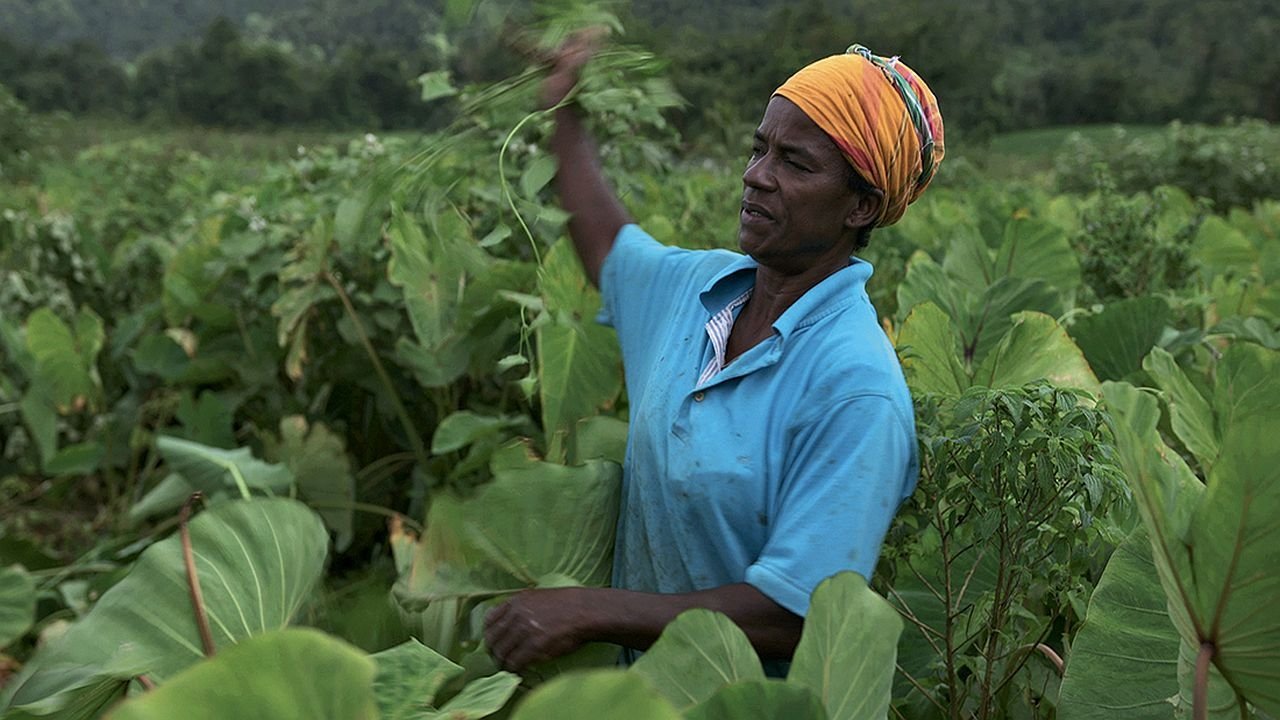
You Think the Earth Is a Dead Thing
7.620191h 10mTV MovieDocumentary
Just one of the many far-reaching impacts of the slave trade on human history is on agriculture and horticulture. While the French plantation owners on the Caribbean island of Martinique had their gardens laid out, Versailles-style, their enslaved workers continued their tradition of using medicinal wild herbs. Nowadays these herbs represent one of several resources through which the people of Martinique counter the health and ecological ravage caused by the use of pesticides on the banana plantations. Farmers are reclaiming uncultivated lands to grow indigenous vegetables, without any industrial pesticides; they fight boldly for simple biodiversity.
Cast
M
Marie-Nicolette Reibec
Self
S
Suzette Mauzole
Self
M
Moïse Chérubin-Jeannette
Self
E
Emmanuel Nossin
Self
S
Sylvie Boudre
Self
A
Anne-Lise Bellance
Self
V
Véronique Montjean
Self
M
Marie-Jeanne Montjean
Self
J
Joseph Mauzole
Self
A
Arnaud de Meillac
Self
J
Jean-Claude Montjean
Self
You May Like

Cacu: A Change for Life
Cacu: A Change for Life
2019·Movie

Anticosti: La chasse au pétrole extrême
Anticosti: La chasse au pétrole extrême
2014·Movie
Watershed: Exploring a New Water Ethic for the New West
Watershed: Exploring a New Water Ethic for the New West
6.0·2012·Movie
Taking Stock
Taking Stock
1994·Movie
Koyaanisqatsi
Koyaanisqatsi
7.9·1983·Movie

River of Gold
River of Gold
2016·Movie
Another Side of the Forest
Another Side of the Forest
7.5·1974·Movie
White Earth
White Earth
6.4·2015·Movie
An Inconvenient Truth
An Inconvenient Truth
7.0·2006·Movie
It Takes a Flood
It Takes a Flood
2021·Movie

Forbidden Forest
Forbidden Forest
7.0·2004·Movie
Another World
Another World
7.2·2014·Movie